Hawaiian Cultural Experiences Big Island: The Shoreline as Teacher
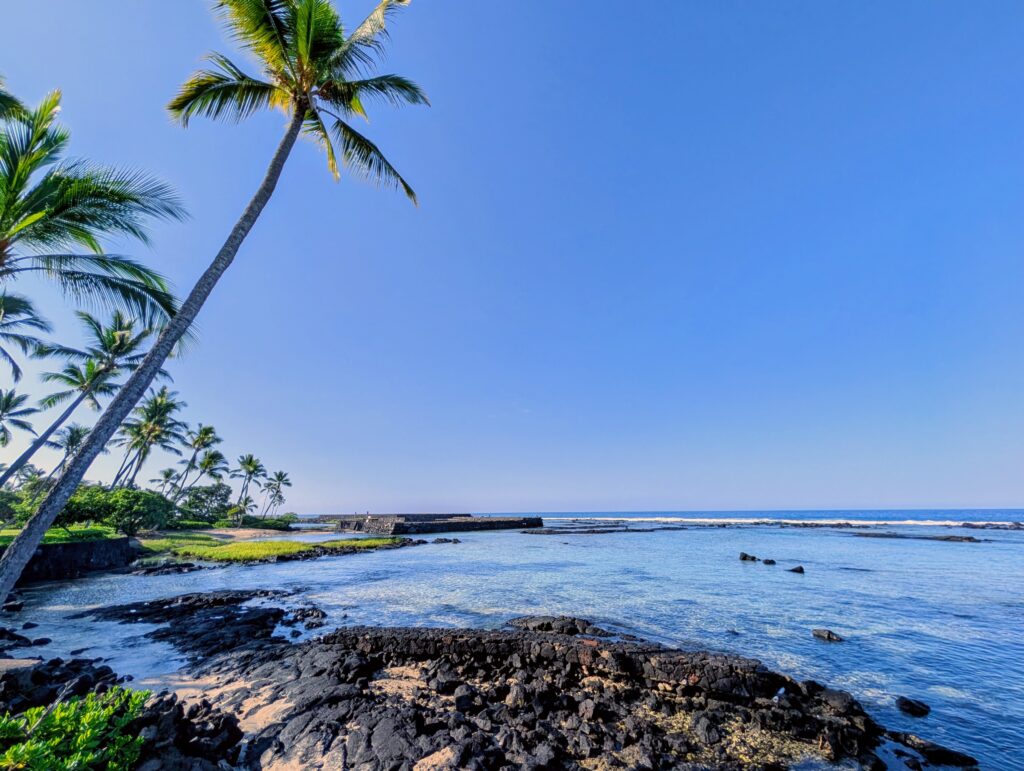
The shoreline at Kahaluʻu is not an outdoor stage. For travelers searching for Hawaiian cultural experiences Big Island gatherings often treat the ocean as passive scenery behind a raised platform. At Kahaluʻu Bay, the physical environment directs the entire evening. The wind coming off the water, the tide moving across the reef, and the dark basalt rock determine how voice, movement, and memory are shared.
How the Physical Shoreline Informs ʻOli and Hula
A hālau (hula school) does not practice in isolation from its surroundings. When dancers and chanters from Hālau Kaʻeaikahelelani gather at the water’s edge, their posture responds directly to the ground beneath them. They stand on uneven volcanic rock and coastal soil, not a sprung wooden floor.
This physical connection shapes every movement. In hula (dance), balance comes from adjusting to the natural grade of the shoreline. The rhythms of the ocean provide an audible cadence that the chanters must match or rise above.
In ʻoli (chant), the voice must carry through salt spray and sea breezes. The chanter does not project into an insulated theater, but speaks directly into the open air. This physical reality is the foundation for why Lanikai gathers in Kahaluʻu rather than in a hotel ballroom or an artificial auditorium.
Grounding Moʻolelo in Basalt and Tide
Storytelling without a sense of place quickly becomes abstract folklore. At Kahaluʻu, moʻolelo (stories) belong to the specific landmarks visible from the gathering site. The narrators do not recite general scripts created for tourists.
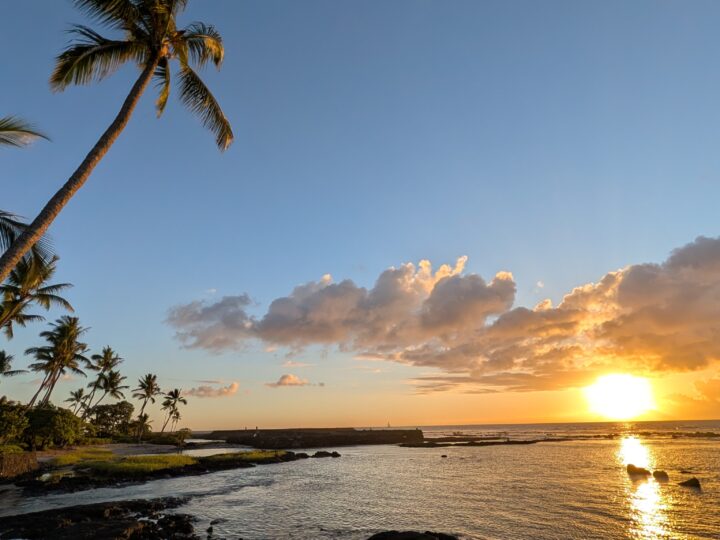
When an account mentions an offshore current, guests can see the water breaking over that exact reef line. When a history touches the aliʻi (chiefly lineage) who lived along this coast, the dry-stacked lava stone walls of the royal complex sit just steps away. The land serves as tangible evidence of the accounts being shared.
This grounding changes how a listener receives the history. You are not asking your imagination to picture an unfamiliar setting. You are feeling the cooling evening air and listening to the same ocean swells that framed those events generations ago.
Practice in Continuity Rather Than Stage Entertainment
Lanikai is not an entertainment revue designed to dazzle an audience. It is an active cultural gathering presented by a working non-profit foundation. The practitioners who share their knowledge are carrying forward responsibilities handed down through their lineage.
Their participation is not performance for entertainment. It is practice in continuity. As shared in the reflections introducing Lanikai at Kahaluʻu, the gathering is designed to maintain living traditions through direct community engagement.
Because this is a gathering rather than a production, the boundary between presenter and attendee remains porous. Guests sit at shared communal tables on natural ground. Everyone in attendance breathes the same coastal air and eats together as darkness settles over the bay.
The Role of Meaʻai in Connecting to the Coast
The relationship with the shoreline extends to the dinner served during the gathering. A shared meaʻai (dinner) prepared by a culturally connected local chef is an integral part of the three hours. Food is not treated as an afterthought or a standard catering buffet.
The meal relies on ingredients sourced from regional farms and surrounding waters. Staples like sweet potato, and fresh fish connect the table directly to the agricultural systems of Hawaiʻi Island. Eating these provisions in view of the sea completes the sensory understanding of the landscape.
Sitting down to eat together creates a natural pause in the evening. It allows visitors and kamaʻāina (Hawaiʻi residents) to talk, digest what they have heard, and experience the shoreline as a place of hospitality.
Preparing for an Outdoor Gathering
Because the gathering takes place outdoors in a living coastal environment, the setting dictates practical considerations. Weather is not controlled by thermostats or tents. Light rain is considered a natural element of the evening, and gatherings proceed through passing showers.
-
Check-in begins at 4:45 PM every Friday (4:00 PM in the winter months), with the gathering running from 5:00 PM to 8:00 PM (4:15 PM to 7:15 PM in the winter months).
-
The site requires short walking across natural turf, uneven dirt, and coastal stone.
-
Comfortable, flat footwear is recommended over formal or elevated shoes.
-
Bringing a light jacket or wrap ensures comfort when ocean breezes cool after sunset.
Approaching the evening with awareness of the physical elements helps guests arrive in the right frame of mind. You are stepping onto ground that demands attention, respect, and simple preparedness.
Reciprocity and Non-Profit Stewardship
Treating the shoreline as a teacher also means taking responsibility for its future. Lanikai is hosted by Hālau Kaʻeaikahelelani, a recognized non-profit organization dedicated to cultural education. Ticket proceeds do not flow to a corporate hospitality conglomerate.
Instead, resources support the cultural practitioners, musicians, genealogists, and chefs who contribute their labor. The funds sustain educational programs, student instruction, and land stewardship initiatives that continue long after the Friday evening concludes.
When you sit along the shoreline at Kahaluʻu, you participate in an exchange that values cultural integrity over commercial spectacle. The bay remains what it has always been: a foundation for learning, memory, and community life.