Why Lanikai Is Held in Kahaluʻu and Nowhere Else
Lanikai happens on Friday evenings in Kahaluʻu, on oceanfront ground that is not usually open to the public. As a weekly Kahaluʻu cultural gathering Kona residents and visitors attend together, the evening is rooted entirely in this specific shoreline. The gathering is not an event that could be packed into crates and moved to a resort lawn or a hotel ballroom. It exists here because the land itself informs the work.
The Shoreline Is the Setting, Not a Stage
The land is not a backdrop. It is part of the teaching.
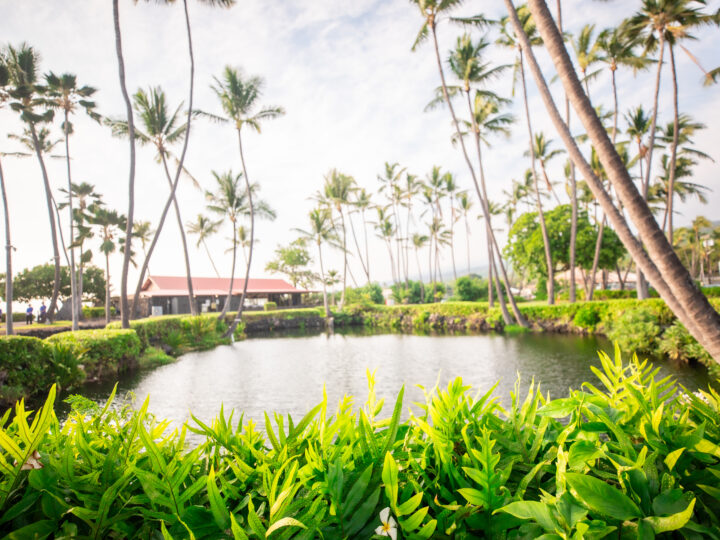
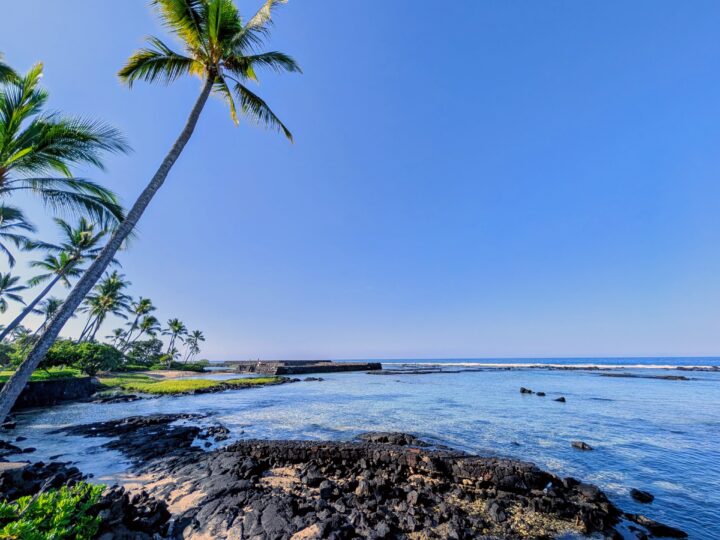
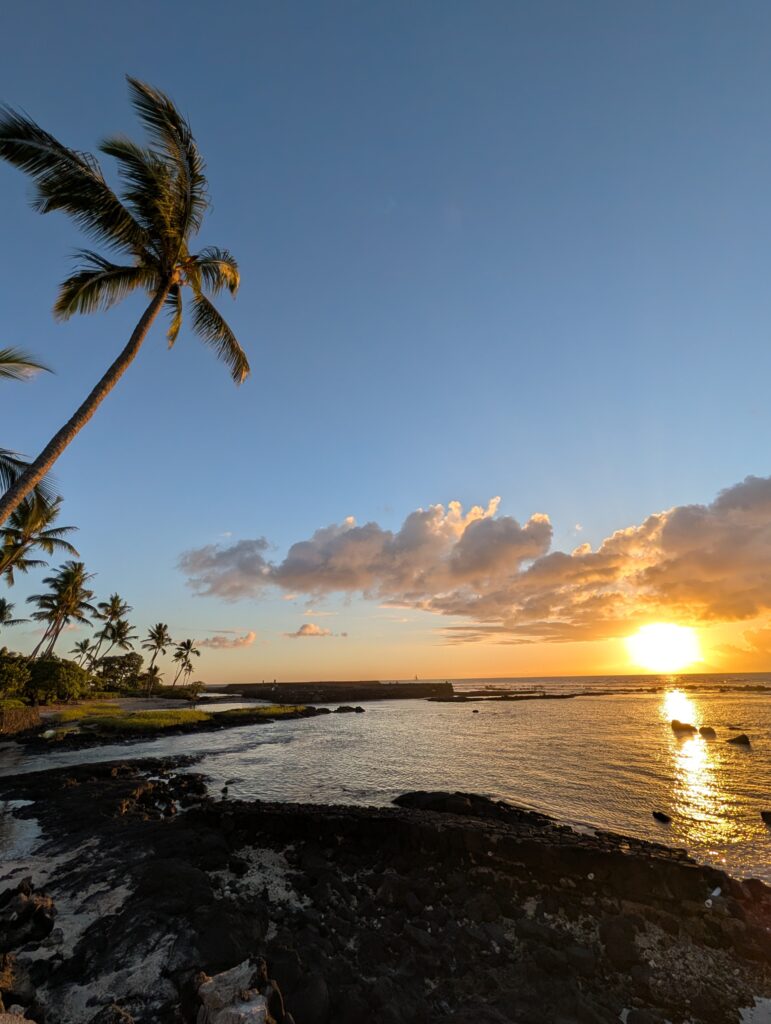
At Kahaluʻu, the physical environment does not serve as decoration for an audience. Dark basalt lava shelves meet the sea directly, creating natural tide pools and channels where fresh spring water enters the bay. Basalt shelves break the incoming swells before an offshore current sweeps across the outer reef. Every sound during the gathering, from the breaking surf to the wind moving through the coconut palms, shares the space with the human voice.
When an ʻoli (chant) is offered toward the water, it is spoken to the actual elements present at that hour. The chant responds to the temperament of the wind, the rise of the tide, and the light leaving the western horizon. Moving the gathering indoors or onto an artificial stage would sever that connection completely.
A Royal Complex Shaped by Lineage and Ocean Waters
Kahaluʻu is a wahi pana (sacred site) and an oceanfront royal complex with generations of recorded history. For centuries, aliʻi (chiefly lineage) lived, governed, and cultivated food and community along these shores. The dry-stacked stone walls, ancient terraces, and shoreline pathways that remain were built by hands that understood the relationship between the mountain and the sea.
The moʻolelo (stories) shared during the evening belong to Kahaluʻu specifically, and to the aliʻi connected to this land. They are told by the people who carry them through unbroken lineage. These accounts are not broad fables meant to fill time between dinner courses. They are place-based histories that explain why a specific wind has a name, why certain fish gather in the bay, and how ancestors navigated seasonal shifts along this coast.
Because these accounts belong to Kahaluʻu, telling them anywhere else would reduce living history to detached folklore. The integrity of the storytelling relies on the listener sitting on the ground where the events occurred.
Practice in Continuity Rather Than Entertainment
Lanikai is presented by Hālau Kaʻeaikahelelani, an active non-profit cultural organization. A hālau is a house of learning. The dancers, chanters, and musicians sharing their knowledge on Friday evenings are practitioners and students, not hired stage performers.
Their participation is not performance for entertainment. It is practice in continuity. When the haumāna (students) stand to dance hula or recite mele (song), they are fulfilling a cultural responsibility to maintain and transmit ancestral knowledge. As shared in the initial cultural gathering guided by the hālau, the gathering serves as an educational space where traditions are lived and renewed rather than staged as theatrical spectacle.
This distinction dictates the scale of the gathering. A commercial production relies on hundreds of guests seated in concentric rows facing elevated risers and theatrical spotlights. Lanikai remains an intimate outdoor gathering where guests sit together at heavy wooden tables draped with natural woven lauhala mats. There are no microphones distorting the acoustic chants, no synthetic costumes, and no artificial staging.
A Shared Meal Connected to the Land and Sea
Dinner at Lanikai is not a banquet line of generic hotel fare. It is a shared meal prepared by a culturally connected local chef who sources provisions directly from regional farms and local waters. Traditional staple crops like kalo (taro), sweet potato, and seasonal ocean harvests form the foundation of the menu.
The meaʻai (dinner) reflects the natural productivity of the ahupuaʻa, the traditional socio-ecological land division extending from the mountaintop to the outer reef. Eating this food while looking out over the waters that helped inspire regional cultivation reinforces the educational nature of the night. Guests eat together family-style, passing dishes and sharing conversation in the calm dusk air.
Kamaʻāina (local residents) and visitors sit at the same tables. The published kamaʻāina rate exists because Lanikai is a community gathering first. Hālau Kaʻeaikahelelani maintains this policy to ensure neighbors and local ʻohana (families) are always present in the room alongside traveling guests.
What to Expect on Natural Ground
Because the gathering takes place outdoors on historic grounds, the physical reality of the site shapes the guest experience from arrival to departure. Check-in begins at 4:45 PM every Friday, with the three-hour gathering running from 5:00 PM to 8:00 PM. The exact site address is provided directly upon booking confirmation to protect the privacy and stewardship of the location.
-
Walking surfaces: The evening involves short walking over natural terrain, including uneven ground, unpaved dirt paths, and crushed coral. Comfortable, flat walking shoes are strongly recommended over dress heels or delicate sandals.
-
Weather conditions: The gathering is entirely outdoors. Light ocean rain and passing coastal showers are considered natural elements of the setting, so bringing a light layer or windbreaker is advised.
-
Severe weather policy: In the event of severe storm conditions, the hālau reschedules the evening or provides a full refund with advance notice. Standard reservations allow full refunds up to four days prior to the date, or transfers inside four days.
-
Family attendance: Children are welcome to attend with their families. Keiki four and under attend free, while children ages five to twelve receive a reduced rate. Kūpuna (elders) also receive a discounted rate.
Every element of Lanikai belongs to the ground where it stands. The shoreline of Kahaluʻu provides the wind, the water, the stone foundations, and the historical framework that make the gathering possible. When you arrive on Friday evening, you are stepping onto an oceanfront wahi pana where cultural practice remains inseparable from the land.